
Micro Four Thirds Perspectives for 2026-2027
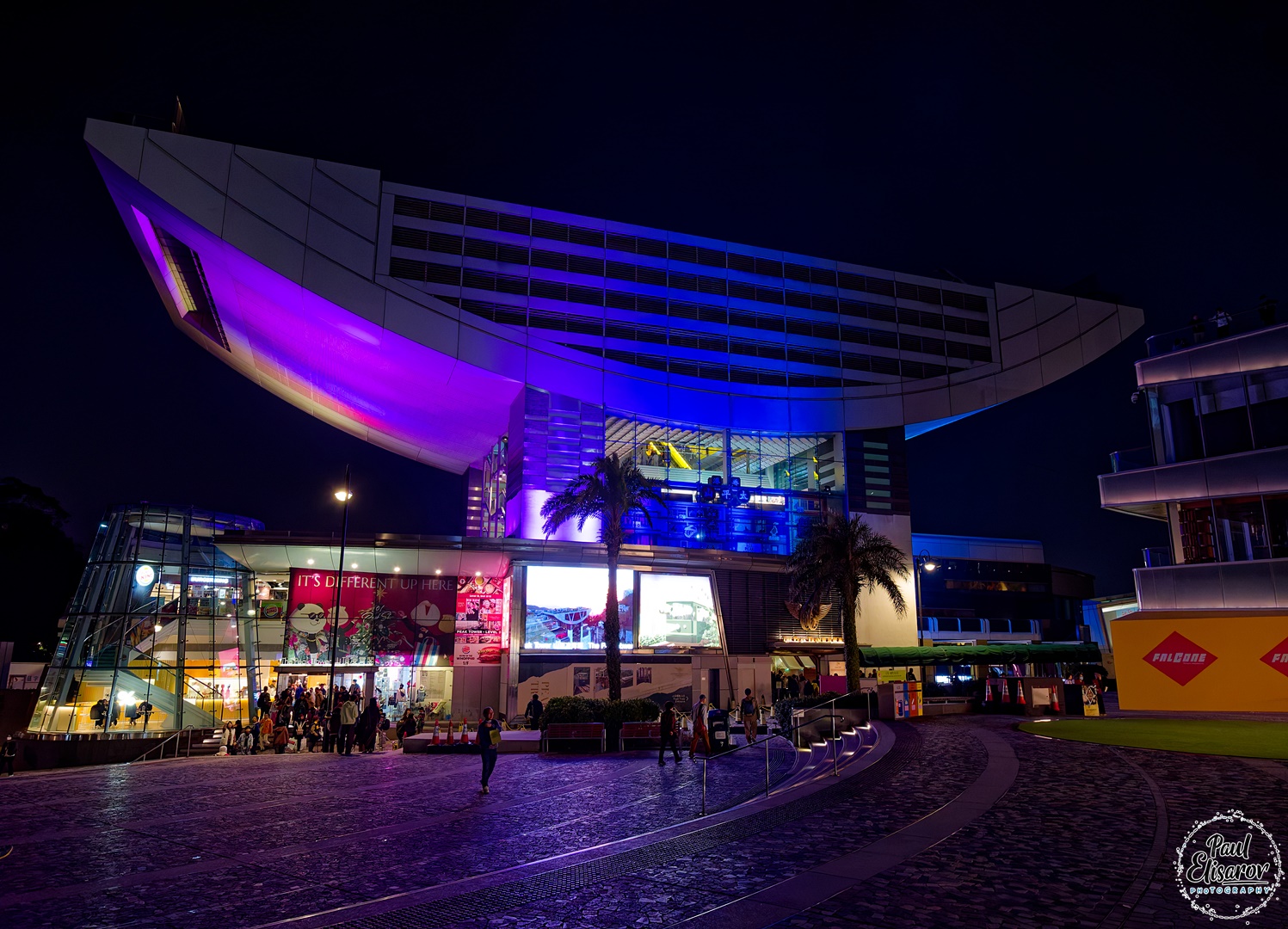
The year 2025 comes to an end... And this is my first even "forecasting" article. In the end of 2025? let's peek into the future and try to understand - what awaits us, Micro Four Thirds users, in coming 2026 and 2027 year? To avoid giving you just text, i will pour in some Hong Kong pictures for you to enjoy. Without further ado, lets start. I will tell you a slightly heretical truth about Micro Four Thirds (MFT) going into 2026 and 2027: the system is not “winning” by becoming the smallest full‑frame substitute. It’s winning by becoming the weirdly versatile, many-headed hydra of interchangeable‑lens imaging—wildlife rigs, cinema cubes, livestream bricks, drone payloads, industrial cameras, and “my phone is the computer now” hybrids—all drinking from the same lens mount. That’s not a consolation prize. That’s a strategy, even if it looks chaotic from the outside.
 The part most people forget is that MFT is explicitly an open standard: it’s designed so you can mix bodies and lenses across manufacturers, because the mount and communication rules are shared. That cross‑brand combinability is basically the system’s founding superpower, and it still matters in 2026–2027 because it lets the mount survive even when individual camera segments wobble.
 When I say “all makers involved,” I’m not going to play the impossible game of “every single MFT‑mount lens ever sold by every boutique brand on Earth.” I’m going to use the system’s own official directories and supporting‑company roster as the grounded definition of “involved.” In the official camera listings, the consumer/stills makers visible at the system level include OM Digital Solutions (OM SYSTEM), Panasonic, Photogram (Alice Camera), and YoloLiv.
 In the official cine/production ecosystem, the roster expands to Blackmagic Design, JVCKENWOOD, ASTRODESIGN, HORSEMAN, Tokina, DZOFILM, Panasonic again, MEDIAEDGE, Logitech, and Laowa (Venus Optics).
 On the lens side, the official stills lens makers highlighted include OM Digital Solutions, Panasonic, Tamron, SIGMA, Voigtländer (COSINA), Kowa, and Laowa (Venus Optics)—and then the broader “supporting companies” roster name-checks additional camera/lens players that orbit the mount in drones, industrial imaging, and specialist optics, including Leica, Carl Zeiss, Yongnuo, TTArtisan, DJI, Autel Robotics, PowerVision, Photron, SVS‑VISTEK, Sharp, Dahua, and others.
 Where MFT is standing at the end of 2025?
If you want the cleanest “state of the union,” I think you look at OM SYSTEM and Panasonic first—not because they’re the only players, but because they set the tone that everyone else riffs on.
Where MFT is standing at the end of 2025?
If you want the cleanest “state of the union,” I think you look at OM SYSTEM and Panasonic first—not because they’re the only players, but because they set the tone that everyone else riffs on.
 On the OM SYSTEM side, 2025 wasn’t a “maintenance year.” OM Digital Solutions announced the OM‑3 in February 2025 and leaned hard into computational photography being a first‑class feature (not a hidden menu hobby), alongside a stacked BSI sensor, fast burst rates, and weather‑sealed, go‑outside ergonomics.
 They also refreshed the travel/outdoor tier with the OM‑5 Mark II (with a confirmed July 18, 2025 release date in Japan, plus the “we got more demand than expected” vibe you only get when people actually buy the thing).
 And then they doubled down on the MFT “reach per kilogram” religion by releasing the M.ZUIKO DIGITAL ED 50‑200mm F2.8 IS PRO with a September 27, 2025 release date—exactly the kind of lens that exists because MFT exists.
 Panasonic’s MFT story looks different, but I think it’s equally telling for 2026–2027: Panasonic is treating MFT as a pragmatic platform for hybrid creators and long‑lens portability, while simultaneously building an app/workflow ecosystem that tries to keep dedicated cameras socially relevant.
 The GH7 (released July 26, 2024) matters here because it’s a statement that Panasonic still believes MFT belongs in serious video: new sensor, updated AF approach, pro workflows—this is not a “farewell tour” product category.
Panasonic Newsroom Global
The GH7 (released July 26, 2024) matters here because it’s a statement that Panasonic still believes MFT belongs in serious video: new sensor, updated AF approach, pro workflows—this is not a “farewell tour” product category.
Panasonic Newsroom Global
 More important for the forward view is what Panasonic leadership actually said at CP+ 2025: they explicitly discussed ongoing MFT lens refreshes (including a revised 100‑400mm with teleconverter support and improved macro capability, and a revised 35‑100mm f/2.8 II with changes aimed at flare/ghosting control and video behavior), and they framed the G97 as an on‑ramp for new users plus a cheap second body for people who want telephoto reach in a smaller kit.
Imaging Resource
More important for the forward view is what Panasonic leadership actually said at CP+ 2025: they explicitly discussed ongoing MFT lens refreshes (including a revised 100‑400mm with teleconverter support and improved macro capability, and a revised 35‑100mm f/2.8 II with changes aimed at flare/ghosting control and video behavior), and they framed the G97 as an on‑ramp for new users plus a cheap second body for people who want telephoto reach in a smaller kit.
Imaging Resource
 That interview also reveals the unglamorous constraint that will shape 2026 and 2027: sensor development cost. Panasonic essentially admitted that putting PDAF everywhere is partly an economics problem, not just a “we forgot” problem, and that product segmentation is real.
Imaging Resource
That interview also reveals the unglamorous constraint that will shape 2026 and 2027: sensor development cost. Panasonic essentially admitted that putting PDAF everywhere is partly an economics problem, not just a “we forgot” problem, and that product segmentation is real.
Imaging Resource
 The “third pillar” that will matter a lot in 2026–2027: streaming and phone‑native cameras
Here’s where MFT gets delightfully strange: it’s no longer just “mirrorless for photographers.” It’s becoming a lens ecosystem that multiple kinds of computers can bolt onto.
The “third pillar” that will matter a lot in 2026–2027: streaming and phone‑native cameras
Here’s where MFT gets delightfully strange: it’s no longer just “mirrorless for photographers.” It’s becoming a lens ecosystem that multiple kinds of computers can bolt onto.
 Photogram’s Alice Camera is literally designed to attach to iOS/Android phones, using on‑device processing hardware (Snapdragon + Google Edge TPU are explicitly called out in the system listing) to crank out share-ready content, with an MFT sensor and mount behind it. And Photogram has publicly said the Alice Camera is getting ready to ship to pre‑order customers.
 YoloLiv’s YoloCam S7 is even more blunt about the target: “Designed for TikTok, Built for Streaming,” with a 4/3" sensor and interchangeable MFT lenses, aiming for simple USB‑C workflows and long‑run thermal stability.
 Logitech’s Mevo Core takes the same idea into multi‑cam production: a 4K, MFT‑mount streaming camera built around app-centric switching and easy deployment, explicitly positioned as a modular piece of a livestream rig rather than a traditional “photographer’s camera.”
 Why do I think this matters for 2026 and 2027? Because it creates new reasons for companies to keep making MFT lenses (especially compact zooms, power zooms, and reliable midrange primes) even if “enthusiast stills bodies” aren’t exploding in unit volume. Streaming doesn’t need full-frame bragging rights; it needs reliability, lens flexibility, and predictable behavior. MFT is oddly well-matched to that.
 Cinema, broadcast, and the “mount that adapts to everything” effect
The cine side is the other underappreciated stabilizer. Blackmagic’s Pocket Cinema Camera 4K is a clean example: a 4/3 sensor plus an MFT mount in a camera designed for film-style workflows.
Cinema, broadcast, and the “mount that adapts to everything” effect
The cine side is the other underappreciated stabilizer. Blackmagic’s Pocket Cinema Camera 4K is a clean example: a 4/3 sensor plus an MFT mount in a camera designed for film-style workflows.
 And the official cine system directory explicitly treats MFT as a shared platform across Panasonic (including box-style production bodies like the BGH1 in the directory), Blackmagic Design, JVCKENWOOD (with models like the GY‑LS300CH listed), ASTRODESIGN (8K systems), plus optics/support from Tokina, DZOFILM, Laowa, and others.
 I think the 2026–2027 implication is simple: MFT doesn’t have to “beat” full frame in the same sport. In cinema and production, the mount’s short flange distance and huge lens availability is itself the product. Even when a production uses adapted glass, the fact that the native mount is MFT makes the camera a kind of universal receiver.
 Lenses: the ecosystem is still the real moat
If I had to bet my lunch money on what keeps MFT healthy through 2026–2027, I’d bet on lenses more than bodies.
Lenses: the ecosystem is still the real moat
If I had to bet my lunch money on what keeps MFT healthy through 2026–2027, I’d bet on lenses more than bodies.
 On the first‑party side, OM SYSTEM is clearly investing in pro telephoto capability (that 50‑200mm f/2.8 is not subtle), and reviewers are explicitly framing those lenses as a strong argument for MFT in wildlife and macro because you get serious reach without dragging a back-breaking kit into the field.
 Panasonic is refreshing key lenses in ways that are very “2026 mindset”: keep the optical formula, but modernize what the lens does in a system—teleconverter compatibility, better AF behavior during zooming (especially with PDAF bodies), video-friendly control behavior, and cold-weather resilience.
 On the third‑party side, the official MFT lens directory still highlights Tamron and Sigma as part of the native ecosystem, alongside Voigtländer/Cosina, Kowa, and Laowa.
 Sigma’s own MFT mount page is also still presenting MFT as a supported mount for its mirrorless lens lines (i.e., it’s not being memory-holed).
 Then you get the “specialty swarm”: Laowa’s MFT presence spans both stills and cine contexts in the official directories, and the wider supporting-company list includes optics brands like Zeiss plus value/character brands like Yongnuo and TTArtisan.
 And even outside the official roster, the broader third‑party market continues to toss MFT versions into their releases—like 7Artisans launching new low-cost lenses with MFT variants.
 So… what do I think 2026 looks like?
I think 2026 will be a year where MFT looks less like a single “camera category” and more like a shared mount that different industries keep rediscovering.
So… what do I think 2026 looks like?
I think 2026 will be a year where MFT looks less like a single “camera category” and more like a shared mount that different industries keep rediscovering.
 For OM SYSTEM, I expect the center of gravity to stay outdoors: computational photography that is fast to access (the OM‑3’s UI choices feel like a philosophical stake in the ground), rugged bodies, stabilization tricks, and lenses that make wildlife and macro feel practical instead of masochistic. The company is already signaling that “small, tough, and clever” is the point, not “big sensor at any cost.”
 For Panasonic, I think the story in 2026 will be “keep MFT credible, but make the workflow irresistible.” The CP+ 2025 interview reads like Panasonic is treating apps and end-to-end flow as part of the product, not marketing garnish, and that’s a very 2026 way to fight the smartphone gravity well. At the same time, they’re explicitly describing how MFT fits as the portable interchangeable-lens system—even for people who already own full-frame cameras.
 And I strongly suspect the creator/streaming segment will keep growing into 2026, because it’s one of the few places where “interchangeable lens + small sensor” is a feature, not an apology. Alice Camera, YoloCam S7, and Mevo Core are basically three different experiments that all point the same way: MFT lenses are becoming the modular optics layer for cameras that are really computers.
 And 2027?
By 2027, I think the conversation around MFT gets clearer—less defensive, more specific.
And 2027?
By 2027, I think the conversation around MFT gets clearer—less defensive, more specific.
 I suppose the healthiest version of MFT in 2027 is one where nobody wastes energy pretending sensor size doesn’t matter, but also nobody forgets that system size and system behavior matter too. MFT’s competitive edge will be: serious telephoto reach in a carryable kit, reliable stabilization, mature lens catalogs, and “done in-camera” computational features that reduce the amount of laptop time between “I saw it” and “I shared it.” The open-standard nature of the system is what lets that ecosystem keep accreting new camera types without needing one company to do everything.
 I also think 2027 is when you’ll see whether the lens makers treat MFT as a long-term annuity (refreshing classics, adding creator-friendly zoom options, keeping cine lenses coming) or as a legacy side quest. The encouraging sign today is that both Panasonic and OM SYSTEM are updating and releasing lenses in ways that look deliberately forward-facing—teleconverter support, better AF integration, video behavior, pro telephoto designs—rather than quietly winding down.
 The bottom line I’m willing to plant my nerd flag on
If you’re asking “Will MFT be alive in 2026 and 2027?”, I think the evidence says yes—but not as a single monolithic market. It’s going to be alive as a platform.
The bottom line I’m willing to plant my nerd flag on
If you’re asking “Will MFT be alive in 2026 and 2027?”, I think the evidence says yes—but not as a single monolithic market. It’s going to be alive as a platform.
 OM SYSTEM will keep being the “take it into weather and come back with the shot” branch. Panasonic will keep being the “hybrid/video + workflow” branch. Blackmagic, JVC, ASTRODESIGN, MEDIAEDGE, and friends will keep using the mount where production constraints reward adaptability. And the creator cameras—Photogram’s Alice Camera, YoloLiv’s YoloCam, Logitech’s Mevo—are quietly building an alternate future where MFT lenses are the optics backbone for streaming-first and phone-first cameras.
 In other words: I think Micro Four Thirds’ 2026–2027 “perspective” is less about a comeback and more about an evolution into the mount that refuses to belong to only one tribe. The universe loves a good general-purpose interface—and MFT is basically a very practical one.
1.4K views