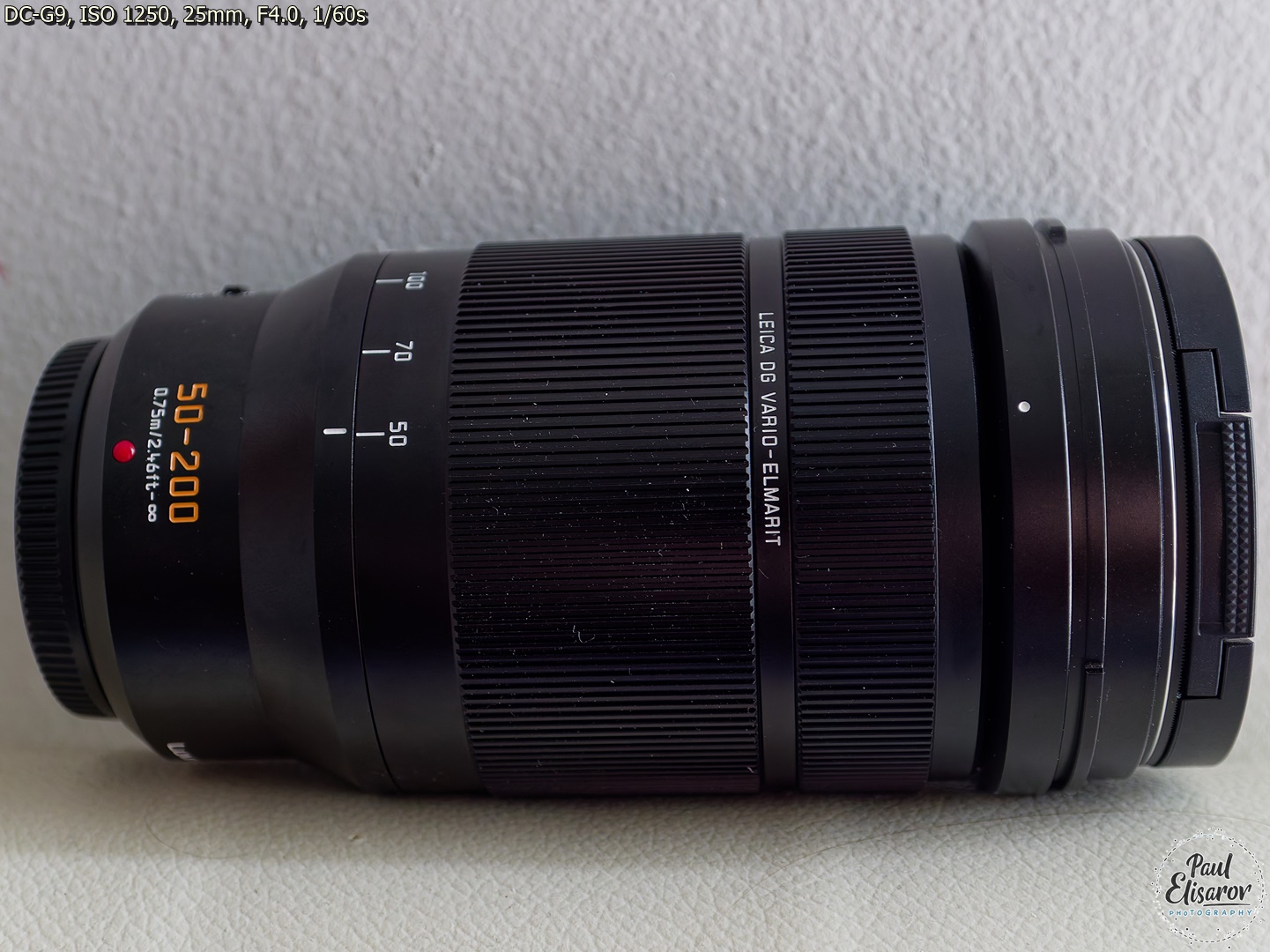
Detailed lens review: Panasonic Leica DG Vario-Elmarit 50-200mm f/2.8-4.0 ASPH. O.I.S.
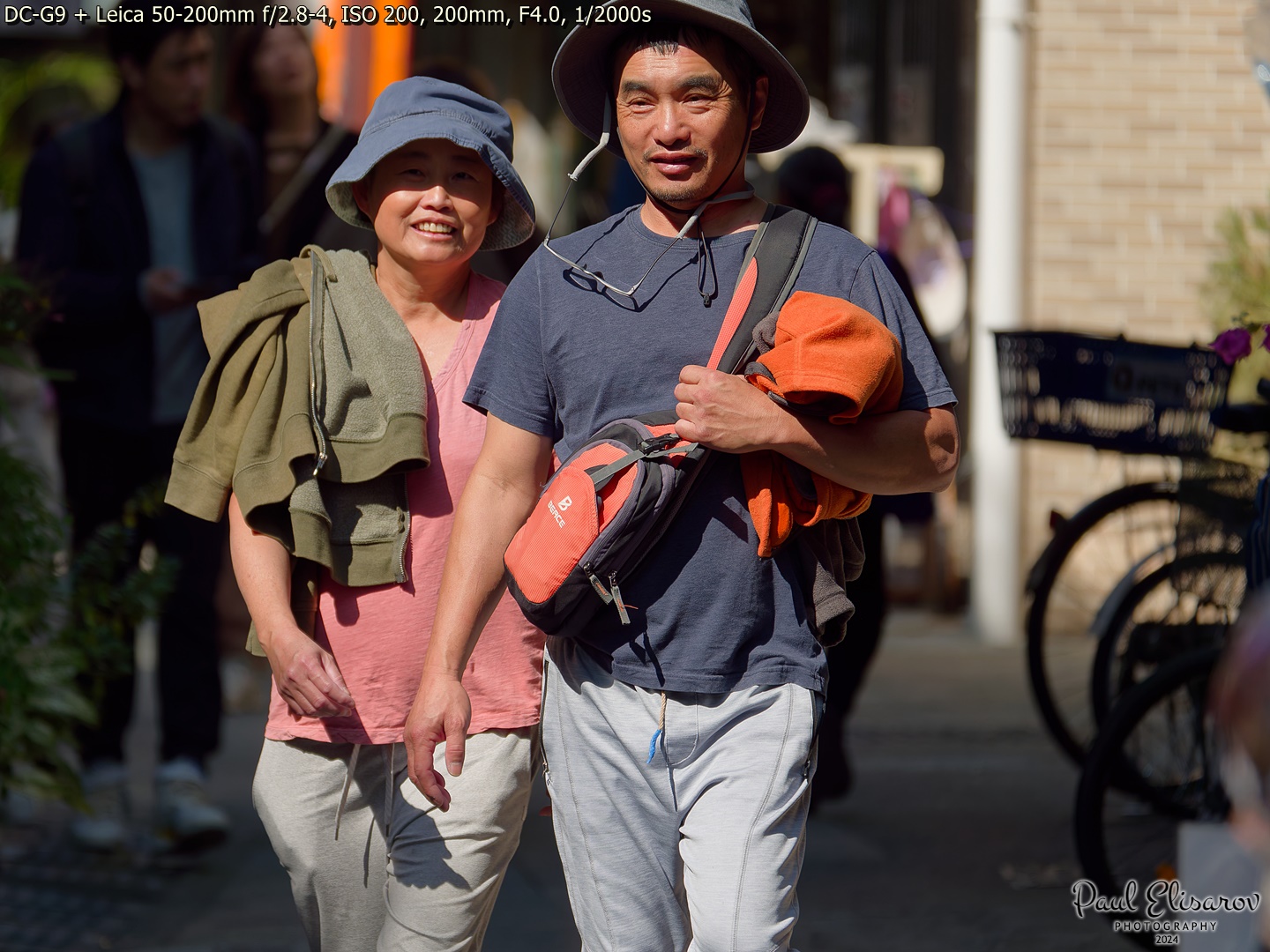
I want to share my impressions and experience using the Panasonic Leica DG Vario-Elmarit 50-200mm f/2.8-4.0 ASPH. O.I.S. lens. For me, this lens has been a true revelation and has become one of my favorite tools for shooting. It impresses with its combination of compactness, high technical specifications, and versatility. This is one of those cases where you feel like you're holding something truly unique in your hands. However, the price of a new copy is too high for me, and its availability on the secondary market leaves much to be desired. But let's take things one step at a time.Imagine you're standing on a narrow street on Cheung Chau Island in Hong Kong. Around you — a bustling crowd, the aromas of street food, and bursts of Cantonese and English. You need to capture a moment: a retired couple walking down the street, engaged in conversation, when their faces light up with a smile. You raise your camera, and… click.

Key specifications:
- Focal length range: 50-200mm (100-400mm equivalent on 35mm cameras). It's like having a superpower in your pocket — bringing the Petronas Towers in Kuala Lumpur so close it feels like you're hovering above them with a drone. But the key thing is that this range is ideal for street photography: you don't scare people like with a giant telephoto lens, yet you don't lose detail.
- Maximum aperture: f/2.8-4.0
- Optical construction: 21 elements in 15 groups, including two UED lenses, two ED lenses, and two aspherical lenses.
- Minimum focusing distance: 0.75 m
- Maximum magnification: 0.25× (equivalent to 0.5× on a full-frame camera). This isn't a macro lens, but its macro capabilities are very impressive. Having used it, I realized I don't need a macro lens, even though I had been considering buying one before.
- Image stabilization: Power O.I.S., with Dual I.S. support
- Weight: 655 grams
- Dimensions: 76 mm in diameter and 132 mm in length
- Protection: Dust- and moisture-sealed construction
- Teleconverter compatibility: Panasonic DMW-TC14 (1.4x) and DMW-TC20 (2.0x)
On paper, the specs are impressive. But as they say, "theory is dry, the tree of life is evergreen" — dry numbers can't always convey the emotions this lens evokes. In real life, it becomes a true assistant, especially for those seeking a versatile tool ready for any challenge.
Now I want to thoroughly examine the lens's sharpness at different apertures and focal lengths so you can assess its real-world capabilities. For this, I've prepared 100% crops from the center and corners of frames shot at various aperture values. This will help understand how the lens behaves in different conditions. The photo shows a house across from mine, about 800 meters away — you've seen it in other reviews many times.
Sharpness at 50mm (Click to open image at 100%)
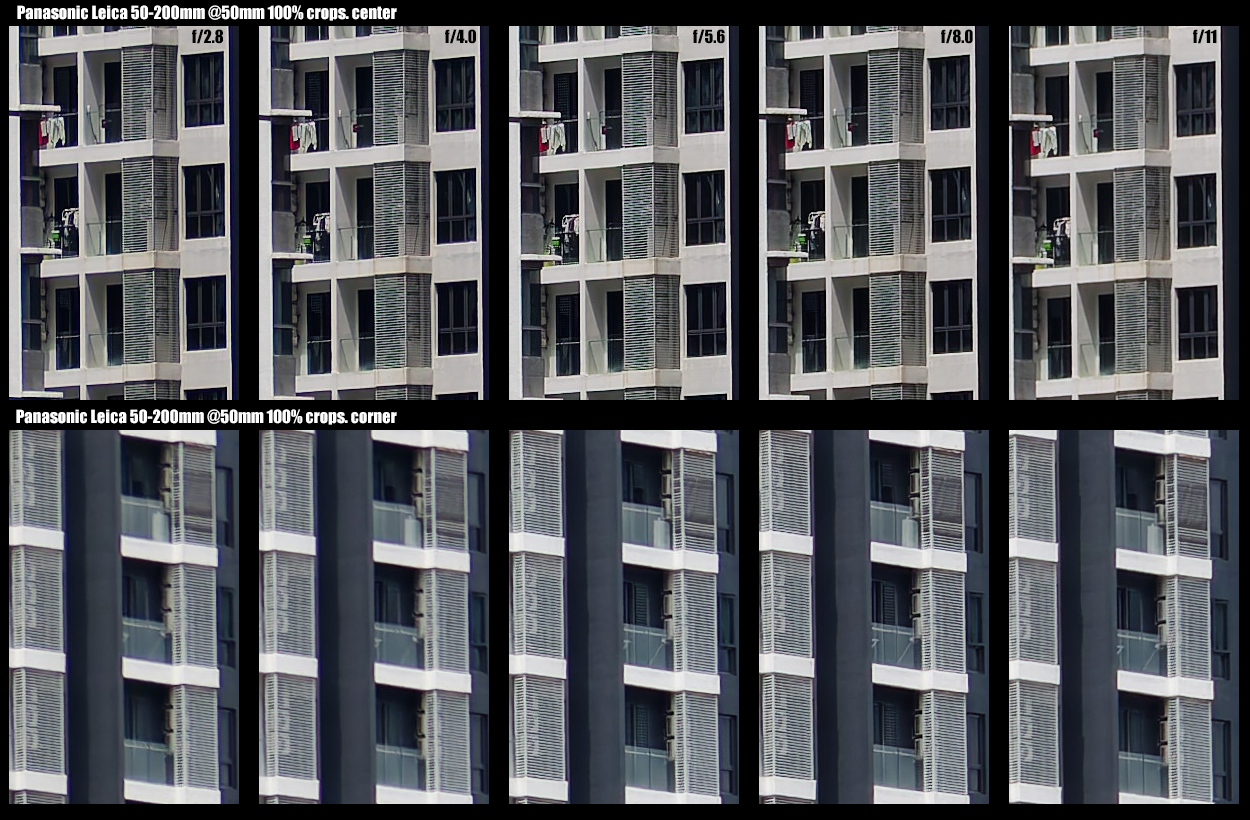
- f/2.8: Sharpness in the center is simply magnificent. Even wide open, detail is excellent — textures, fine elements, and object outlines remain crisp and contrasty.
- f/4: No change in sharpness compared to f/2.8. The center remains just as detailed.
- f/5.6: Sharpness remains at the highest level.
- f/8: Sharpness remains at the highest level.
- f/11: Diffraction becomes more pronounced, but even here sharpness remains at a very good level. The drop is only noticeable upon close inspection.
Corners:
- f/2.8: Slight drop in corner sharpness. However, it's not critical — fine details are still distinguishable, and the frame remains usable even wide open.
- f/4: Corner sharpness improves slightly, but the drop is still noticeable. Nevertheless, detail remains acceptable.
- f/5.6: Corners become nearly perfect. The sharpness drop disappears, and detail reaches the level of the center.
- f/8: Corner sharpness remains at the highest level, matching the center.
- f/11: Slight diffraction effect, but corners still look great.
The center of the frame at 50mm demonstrates outstanding sharpness at all apertures, including wide open. In the corners, there's a slight drop at f/2.8 and f/4, but it's not critical and is easily corrected in post-processing. Starting at f/5.6, the corners become as sharp as the center. This makes the lens suitable for shooting wide open even in situations where detail across the entire frame is important.
Sharpness at 200mm (Click to open image at 100%)
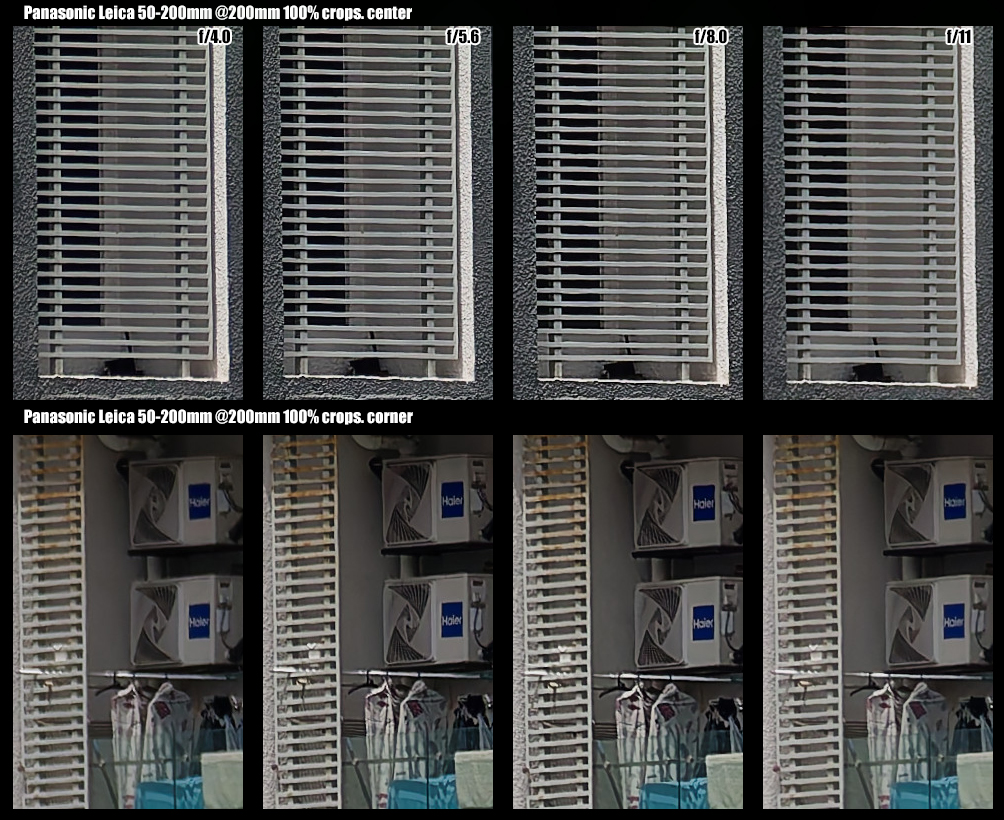
- f/4: At 200mm, f/4 is the maximum aperture, and center sharpness remains at the highest level. Detail is impressive; textures and fine elements are rendered with high clarity.
- f/5.6: Sharpness improves slightly, reaching peak values. This is the optimal aperture for shooting at the long end.
- f/8: Sharpness remains at the same level, but the first signs of diffraction begin to appear.
- f/11: Diffraction becomes more noticeable, but sharpness still remains at a very good level.
Corners:
- f/4: At 200mm, there is a slight drop in corner sharpness, but it's not critical. Fine details, such as building textures or labels on air conditioners, remain readable.
- f/5.6: Corner sharpness improves significantly, and the drop almost disappears.
- f/8: Corners become perfectly sharp, comparable to the center.
- f/11: Slight diffraction effect, but corners still look great.
At the long end, the lens also demonstrates excellent sharpness. The center remains sharp at all apertures, while corners only drop slightly at f/4. However, even at f/4, the drop is not critical, and frames remain usable. Starting at f/5.6, corners become as sharp as the center.
One of the pleasant surprises was the complete absence of chromatic aberrations (CA) at all focal lengths and apertures. Even in challenging shooting conditions — such as backlighting or high-contrast scenes — the lens shows no purple or green fringing. This greatly simplifies post-processing and makes images cleaner and more professional. We'll talk more about this at the end of the review, where I compare this lens to the Panasonic 100-300 II.

Real-World Shooting Experience
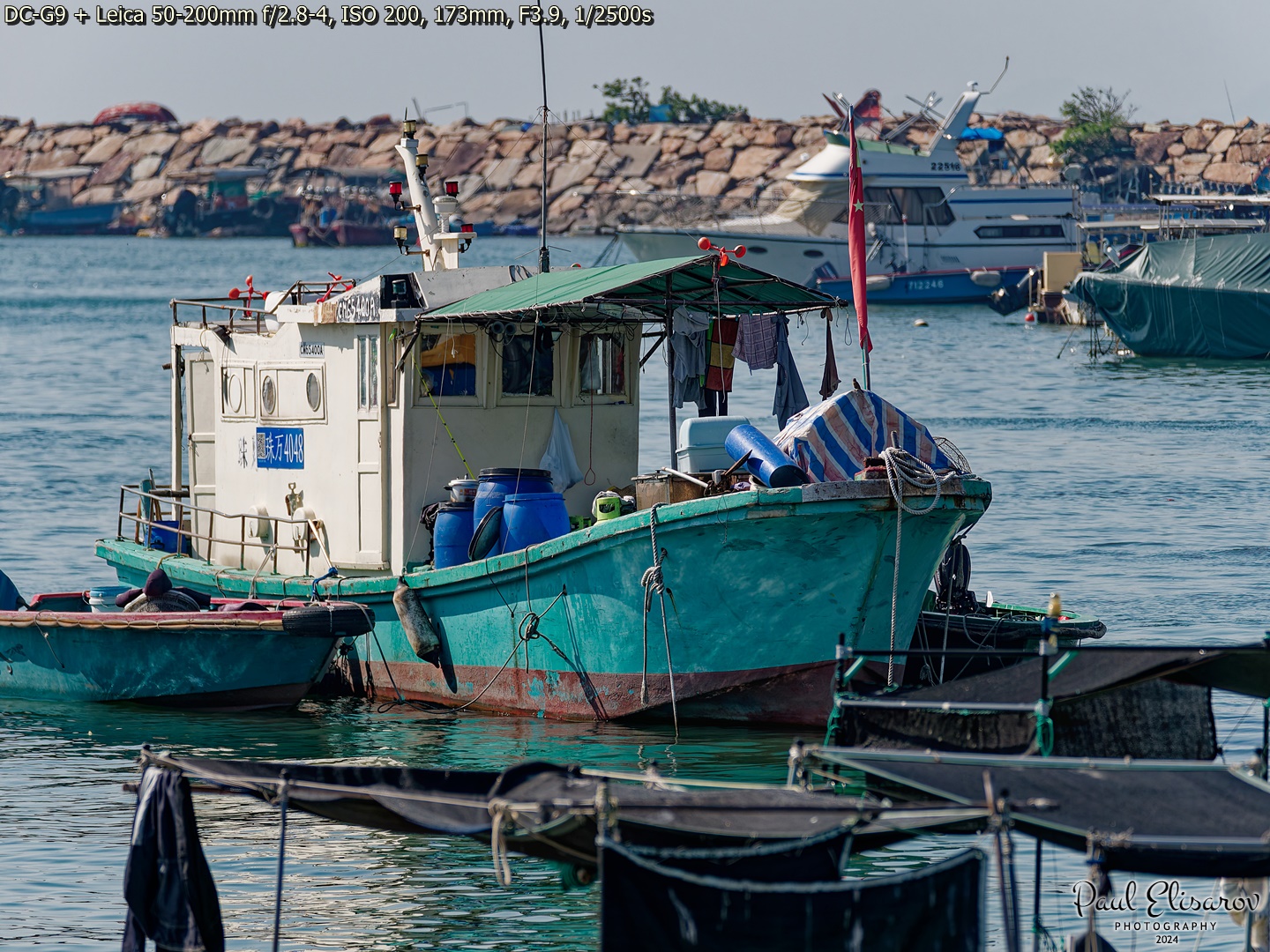
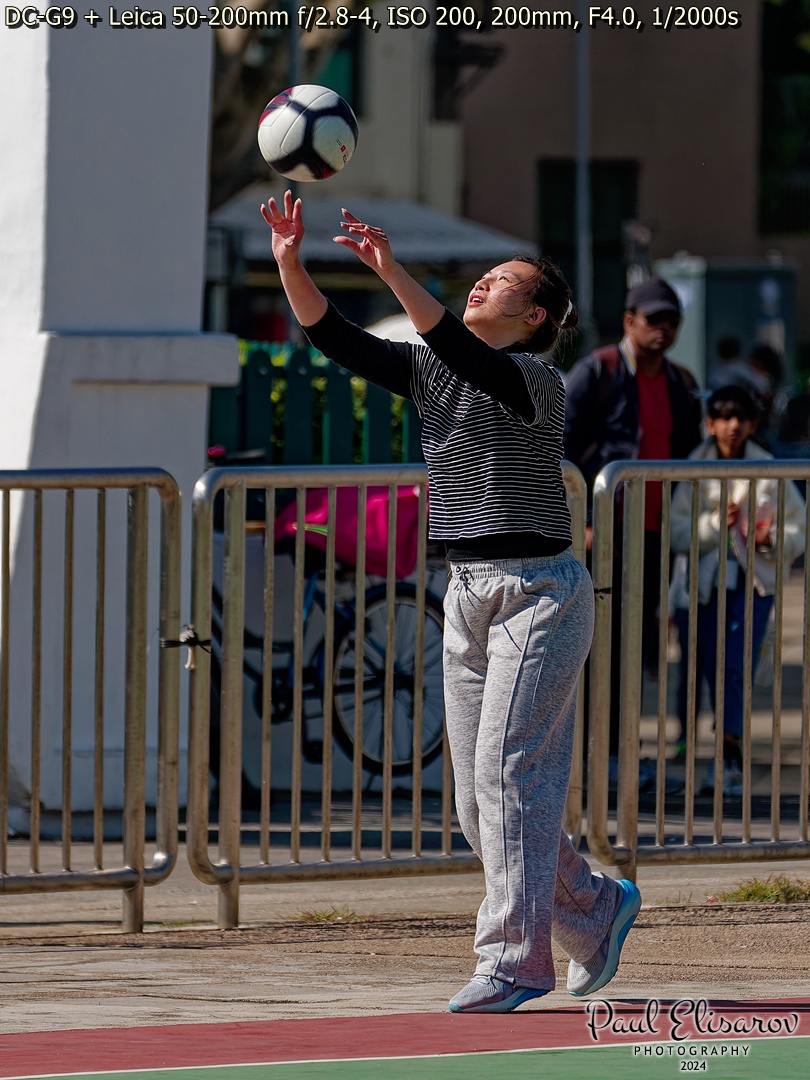
Let's return to one of my days with this lens in Hong Kong. I stepped out of my "villa" on Cheung Chau Island, mounted the lens on my Panasonic G9, and walked the island's streets.
"What to start with?" I thought. Locals were going about their business around me, but with this lens, you can turn everyday life into a great shot.

Build Quality
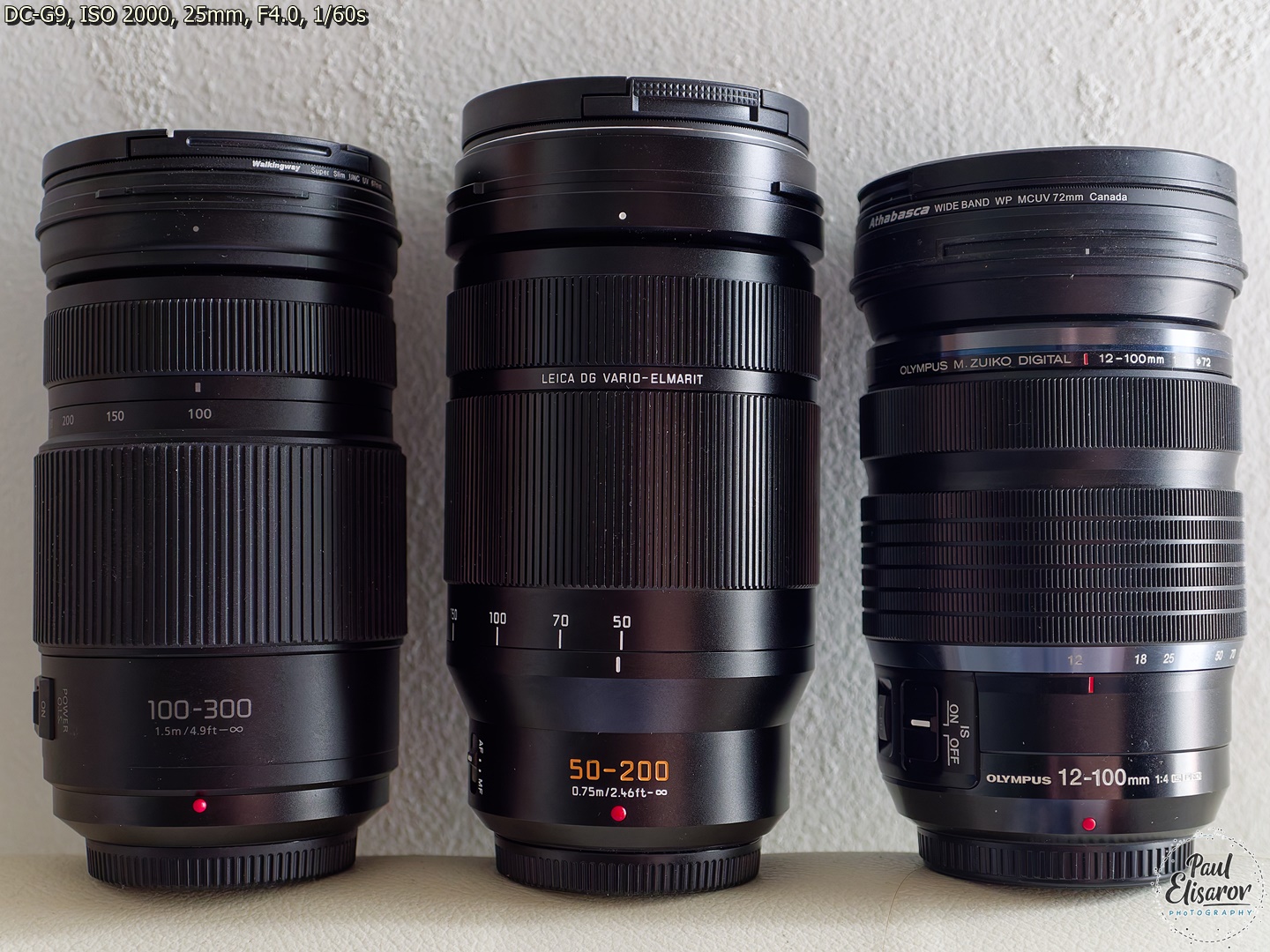
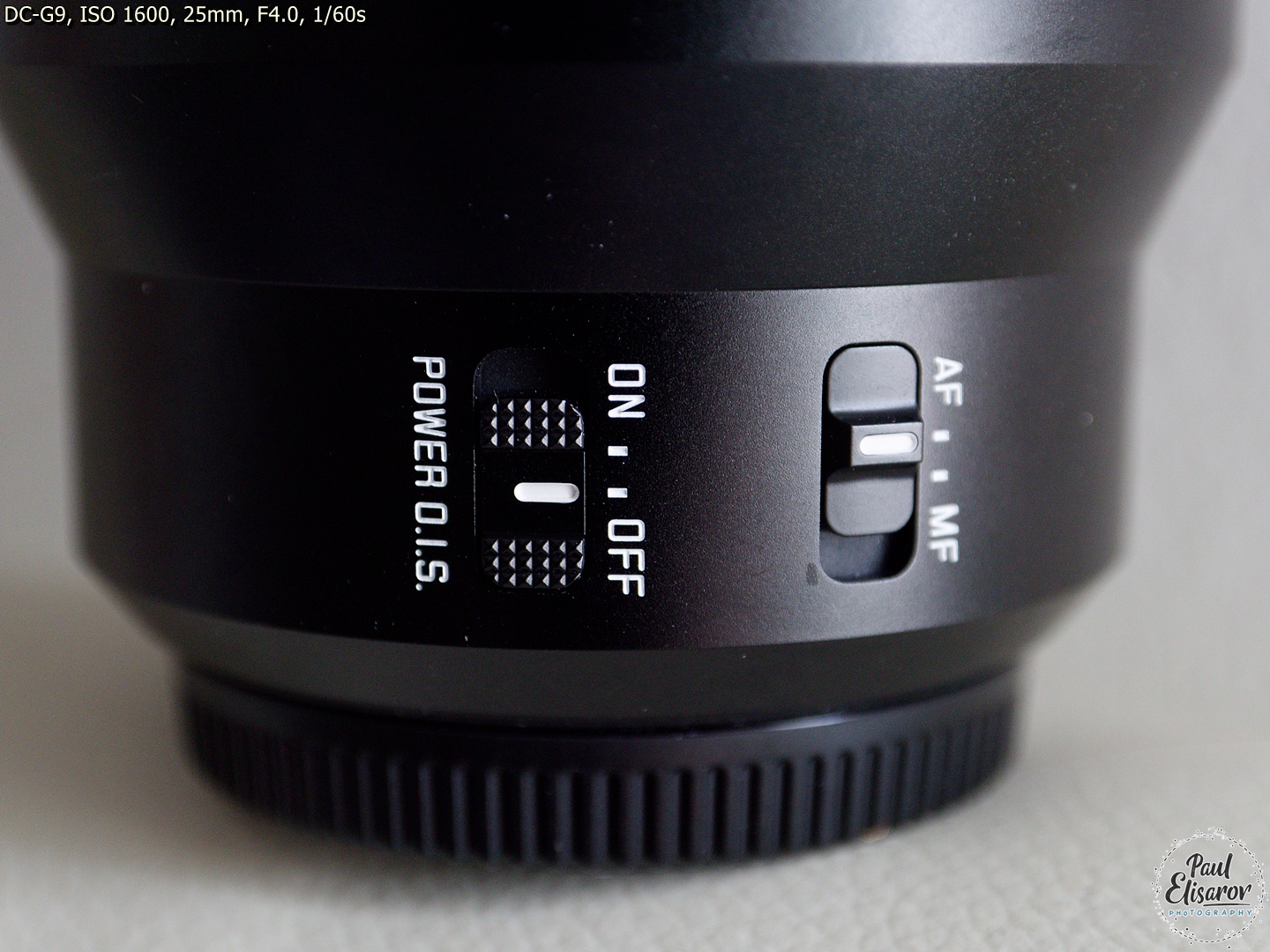
The build quality of the Panasonic Leica 50-200mm is typical of the Leica label. A body made of metal and high-quality plastic, dust- and splash-proof, with a matte coating that doesn't slip in your hands. The AF/MF and stabilization switches are conveniently placed, and the zoom ring has pleasant resistance with markings at 50, 70, 100, 150, and 200mm.
Variable Aperture
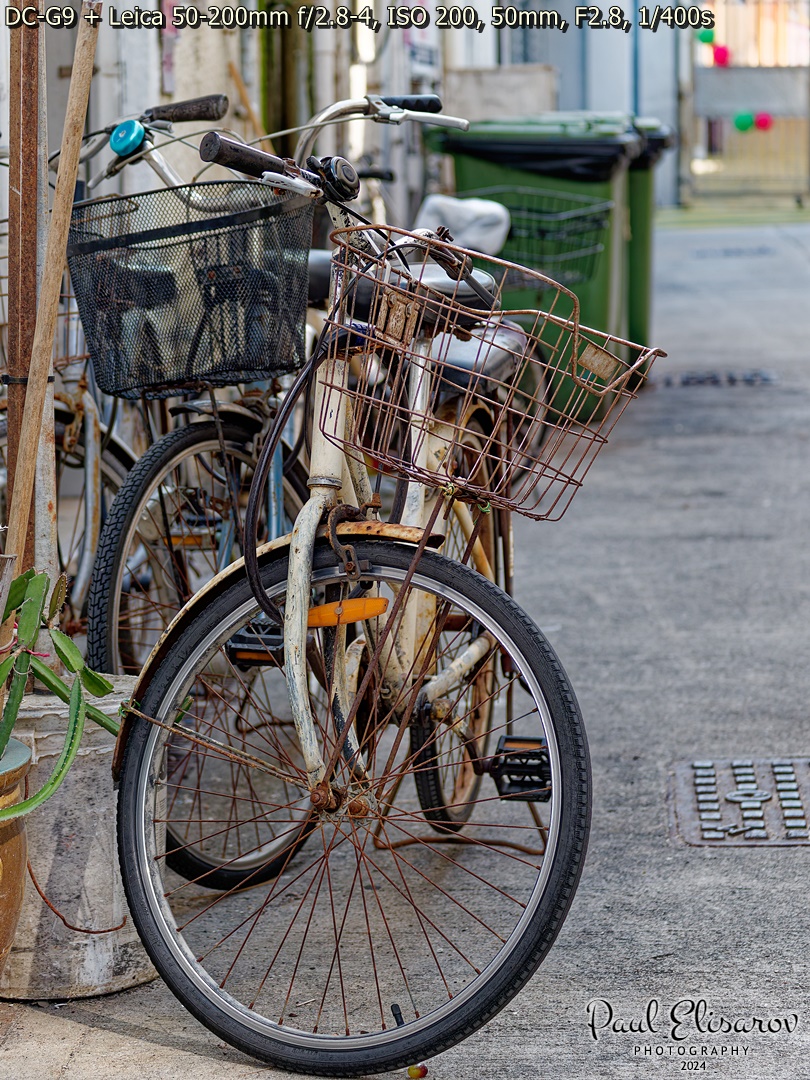
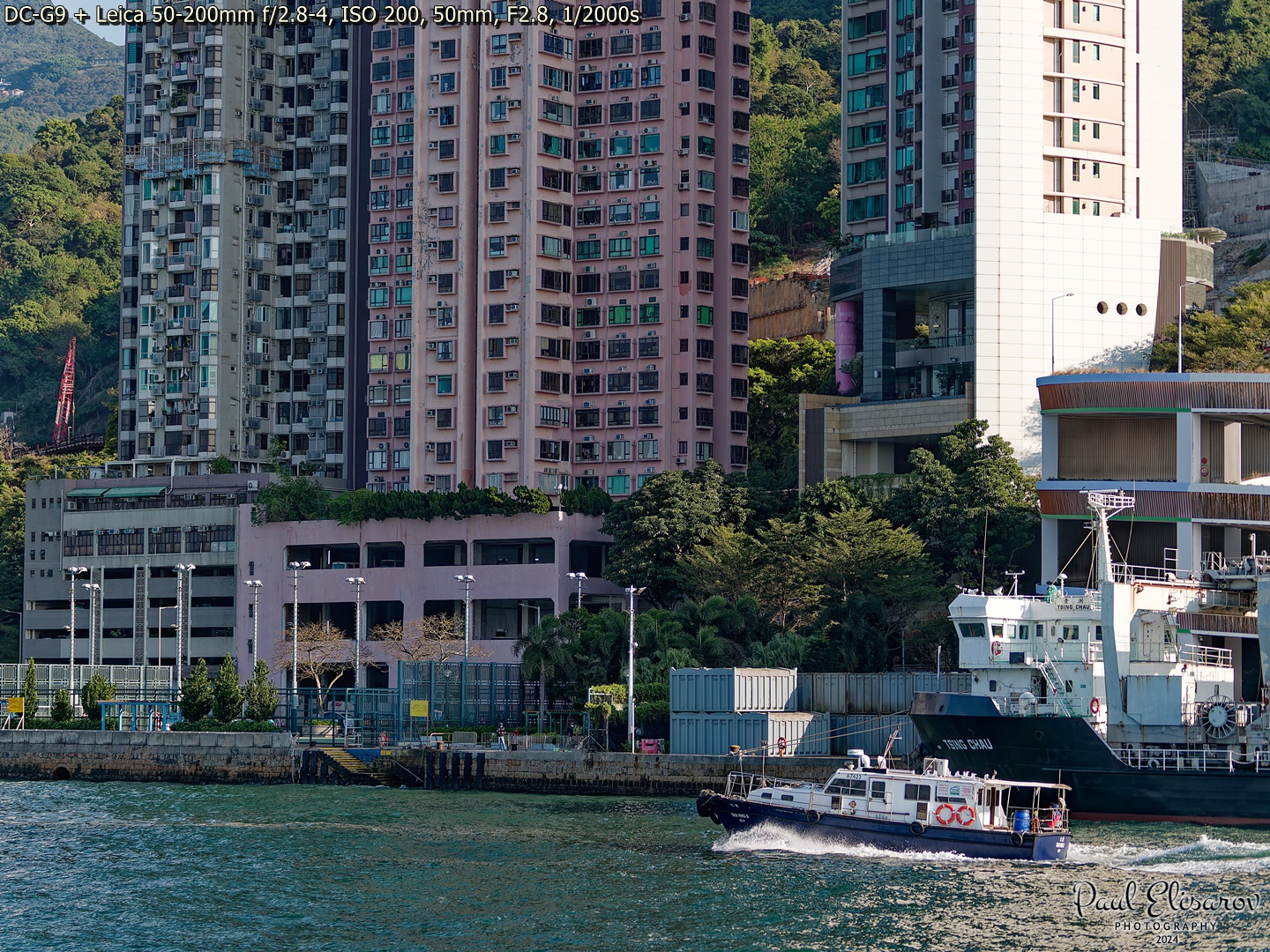
If you, like me, like to control aperture (and I almost always shoot in A mode), the variable aperture of this lens is a topic that requires attention. Let's start with the fact that "f/2.8–4.0" in the name is not just a marketing gimmick, but a very specific compromise between compactness and speed. But how exactly does it work in practice? At the wide end (50mm), the lens generously opens up to f/2.8. However, as soon as you start zooming, the maximum aperture gradually "shrinks." You'll see f/2.8 only at 50mm.

Use Cases
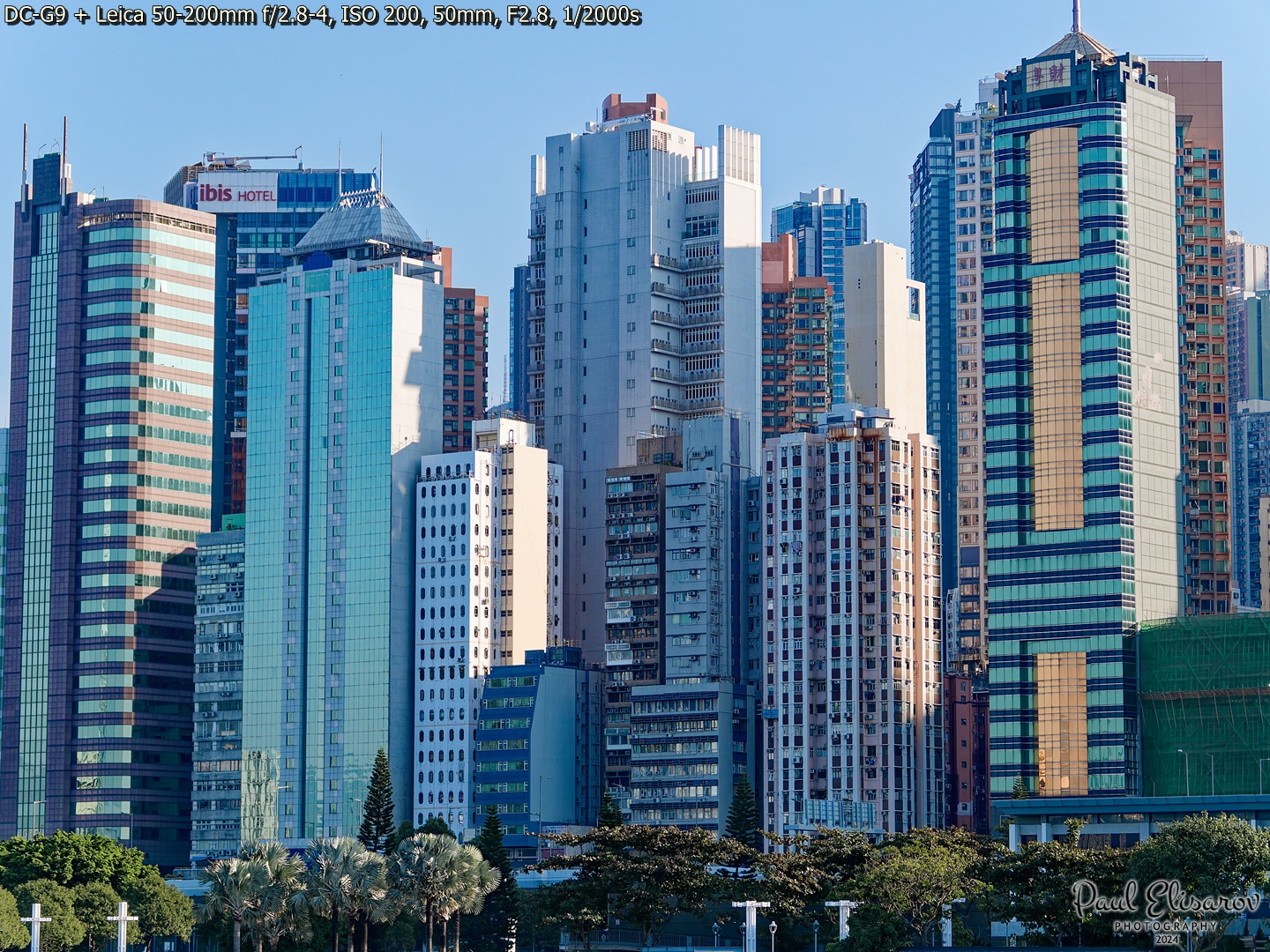
Now let's discuss how this lens performs in real-world conditions. Let me say right away — the focal length range of 100-400mm (in full-frame equivalent) opens up incredible possibilities.



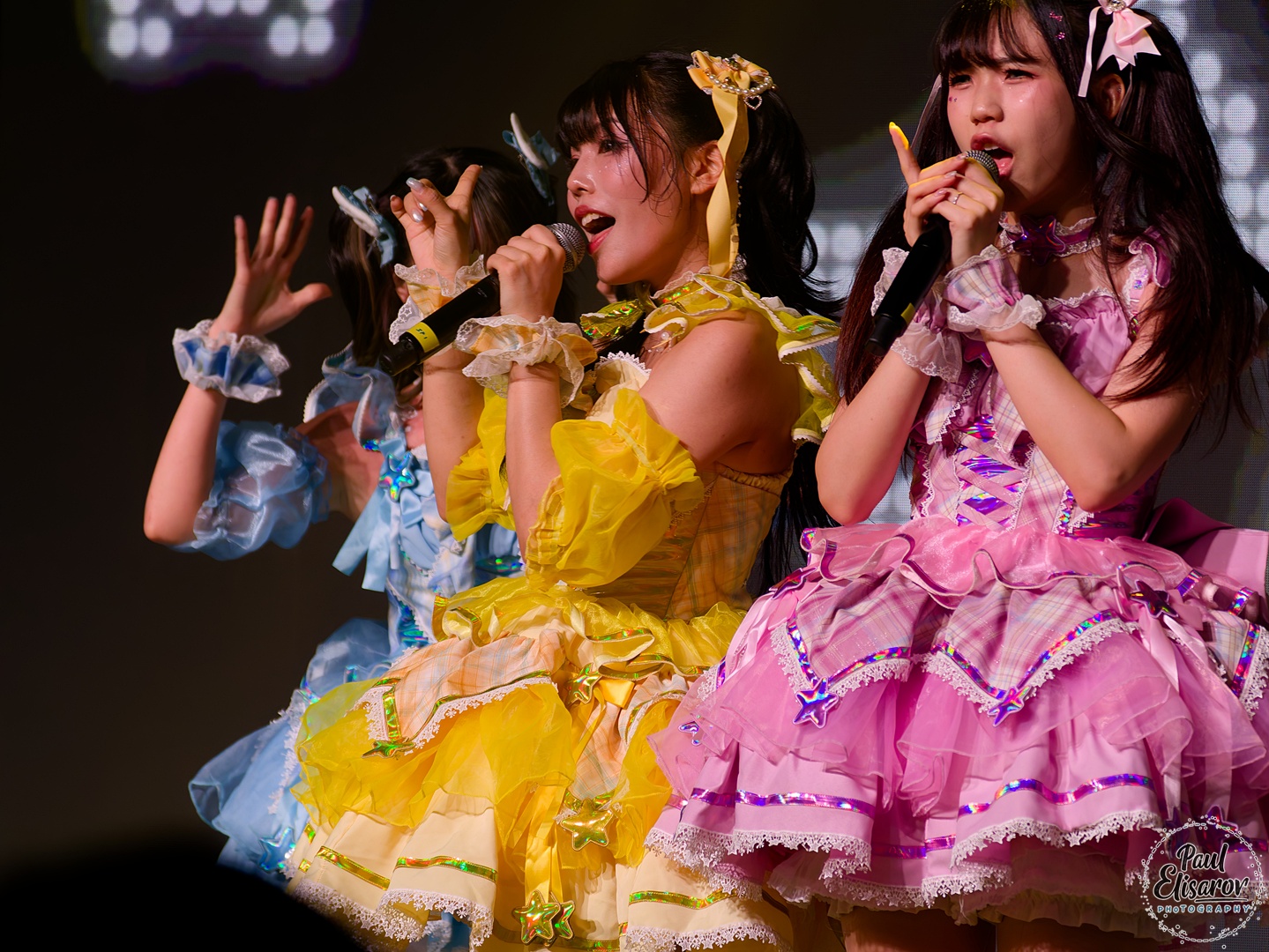

Butterfly Park Experience
Autofocus
Now let's talk about the autofocus system. It works quickly and almost silently, making the lens ideal for situations where speed is important. But there's one strange observation, as I mentioned earlier: on my Panasonic G9, the autofocus of the 50-200mm sometimes yields slightly more misses than the Panasonic 100-300 II or Olympus 12-100. It's not critical, but it's surprising given the lens's class — though it's not noticeable all the time.

Image Stabilization
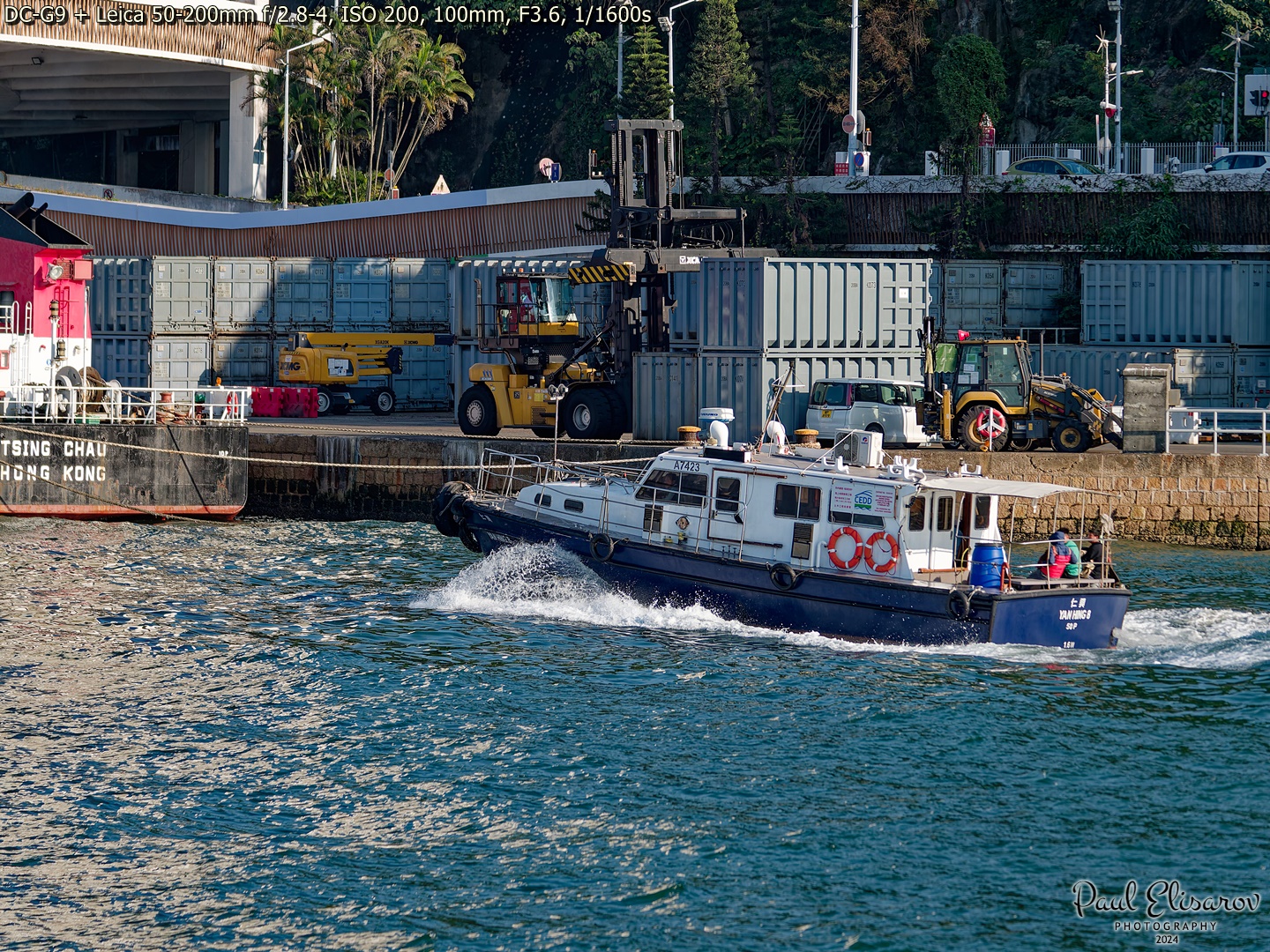
Stabilization is a whole other story. Power O.I.S. here is simply magical. On a ferry in Hong Kong harbor, where waves were rocking the boat, the stabilizer completely eliminated the motion in the viewfinder! I even checked — neither the 12-100 nor the 100-300 were capable of that, but the 50-200 handled it with ease. The system compensated not only for hand shake but also for the movement of the platform. Admittedly, at a shutter speed of 2 seconds, even it gave up — the focal length was just too great. But at 50mm with a 1-second handheld exposure, you can get usable shots.
Teleconverters
Teleconverters deserve a separate mention. With the Panasonic DMW-TC14 (1.4x), the lens becomes 70–280mm f/4–5.6, and with the TC20 (2x) — 100–400mm f/5.6–8. I have neither. In the first case, sharpness loss should be minimal and only visible at 100% magnification. However, the TC20 at 400mm (800mm equivalent!) has a less stellar reputation online. Apparently, autofocus slows down, but for static subjects like architecture or landscapes, that's not critical. There are also new teleconverters that Panasonic quietly released — the TC14A and TC20A. I haven't figured out exactly what makes them better, but maybe they really are improved. By the way, Olympus TCs are not compatible with this lens — only native Panasonic ones.
Comparisons
Finally, let's compare images from this lens with those from other lenses — specifically the Olympus 45/1.2 and the Panasonic 100-300 II/3.5-5.6.
First, let's look at portraits. Here's a shot taken with the Olympus 45/1.2 wide open.


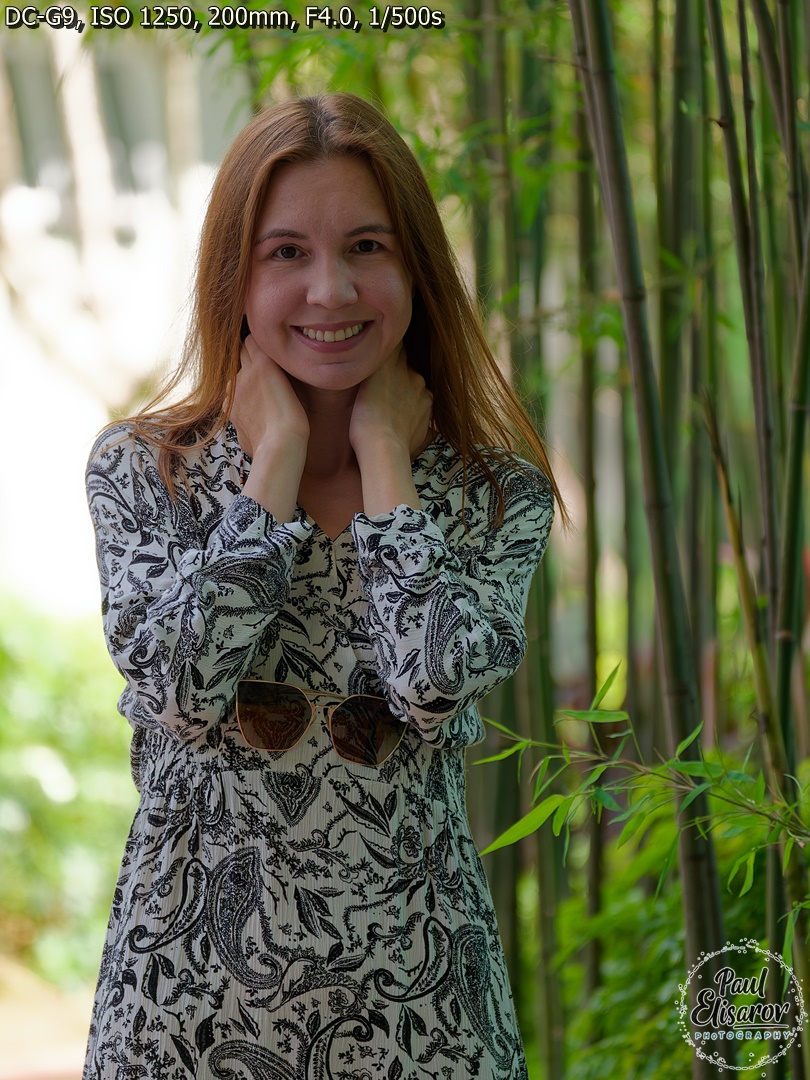
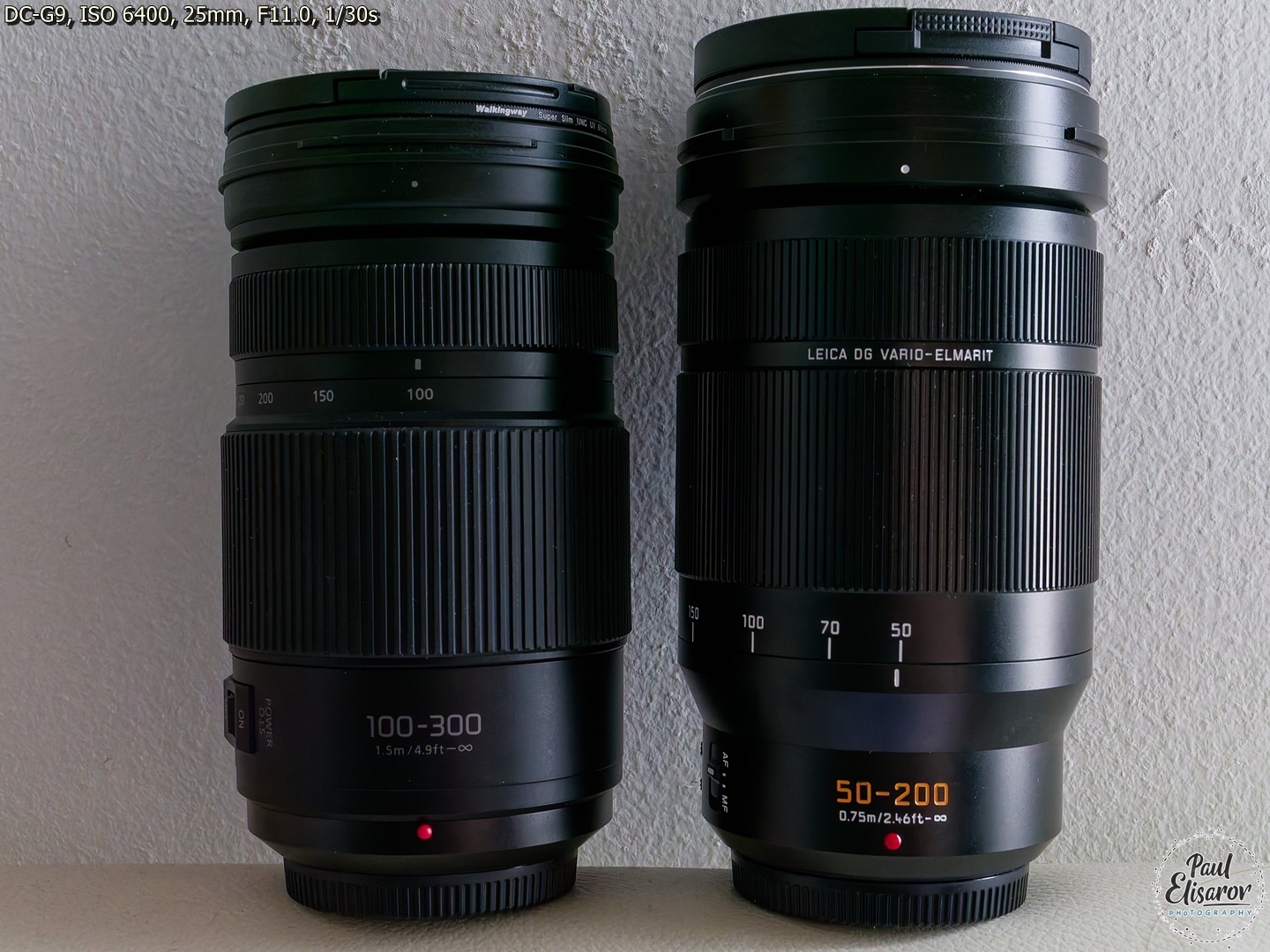
Panasonic Leica 50-200mm vs. Panasonic 100-300 II
Now let's compare two more lenses — the Panasonic Leica 50-200mm f/2.8-4.0 and the Panasonic 100-300 II — at the long end. The main question: can the 50-200mm replace the 100-300mm, especially considering the possibility of cropping? Let's find out.
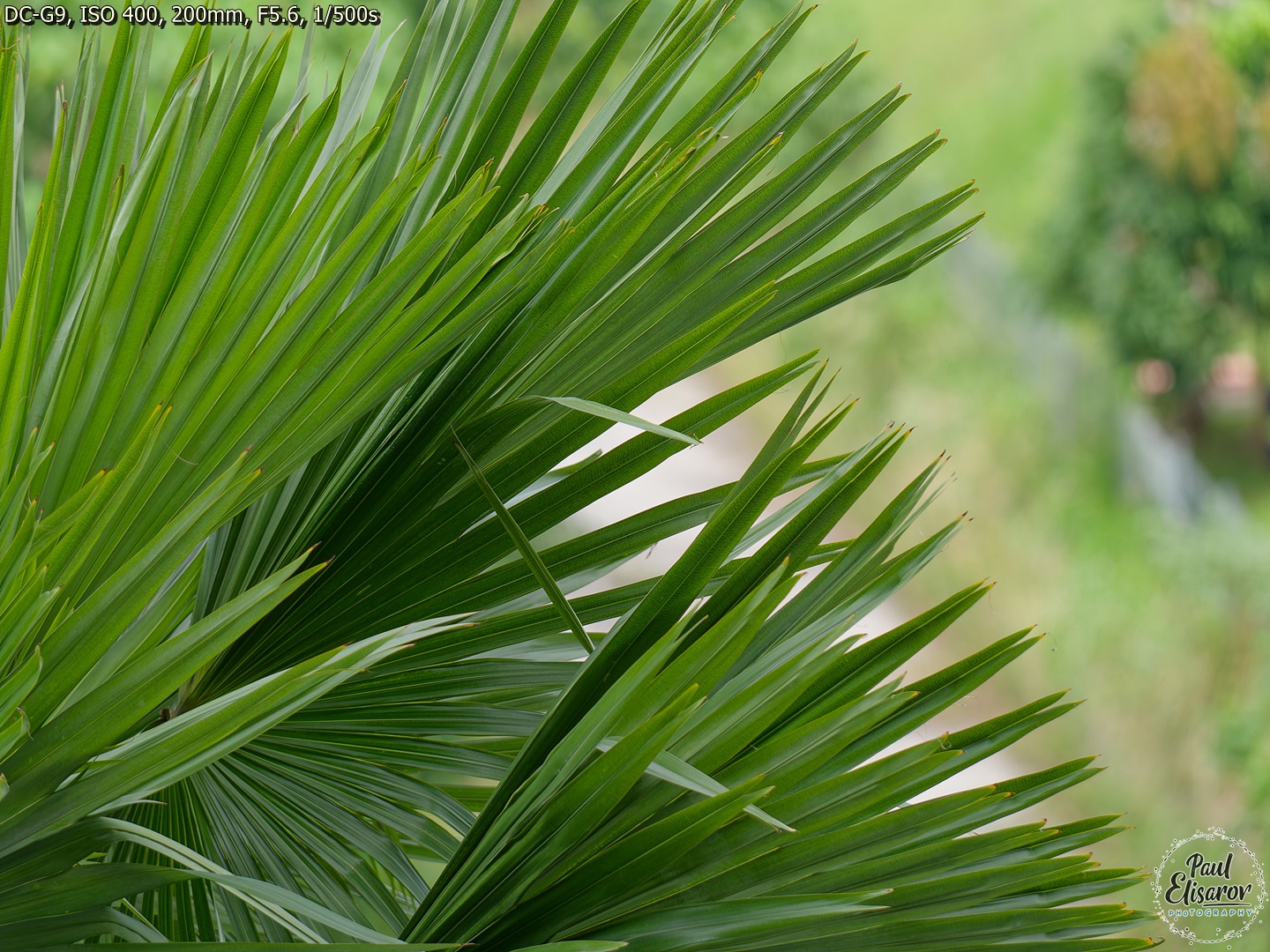
First, let's look at shots taken with both lenses at 200mm and f/5.6. First the Leica, then the Panasonic. At first glance, there's almost no difference. Both lenses demonstrate good detail, contrast, and color rendition. Without magnification, it's hard to tell which shot came from which lens.
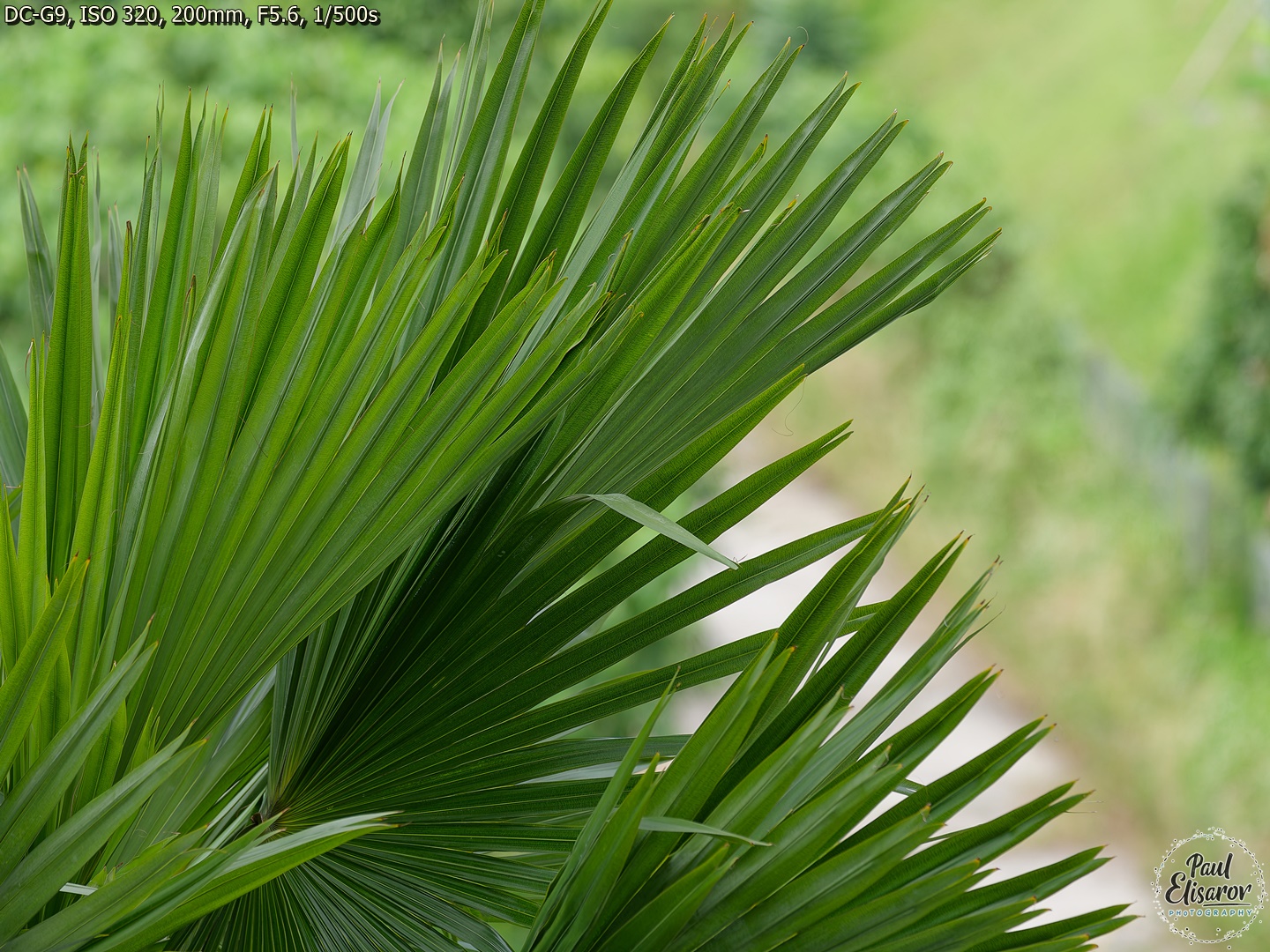
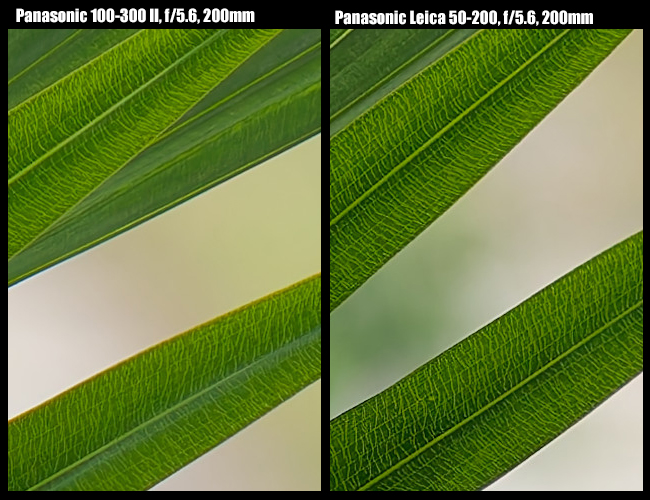
Now look at 100% crops. Upon closer inspection, differences become noticeable.
Now let's address the key question: Can you crop a shot from the 50-200mm to get the equivalent of 300mm, and will that be better than a shot from the 100-300 II at 300mm? Let's look at 100% crops immediately.
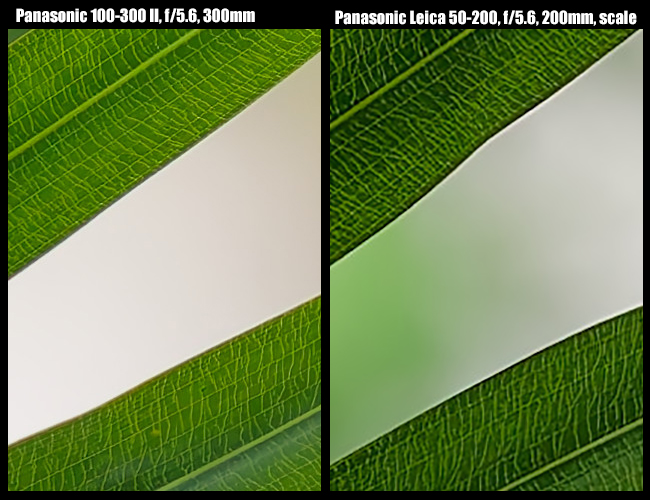
Conclusion: The Panasonic Leica 50-200mm cannot completely replace the 100-300 II if you need true telephoto reach up to 300mm. Cropping shots from the 50-200mm leads to quality loss, and therefore the 100-300 II remains the preferred choice for shooting at longer focal lengths. Yes, there are teleconverters, of course… But unfortunately, I don't have them. So for now, my answer to the question "Do you need a Panasonic 100-300 II if you have a Panasonic Leica 50-200?" is "Yes, you do."
With that, let me conclude my review. Here's a link to an album with many more photos taken with the Panasonic Leica 50-200mm f/2.8-4. And here is another album with technical photos.
P.S. When I was leaving Hong Kong, a taxi driver asked me, "Why are you smiling all the time?" I showed him photos taken with the Leica 50-200mm — I had been shooting on my last day, and the photos were still on the camera. He sighed and said, "I never knew it was so beautiful here." That's what this lens does — it opens up the world anew.
643 views